
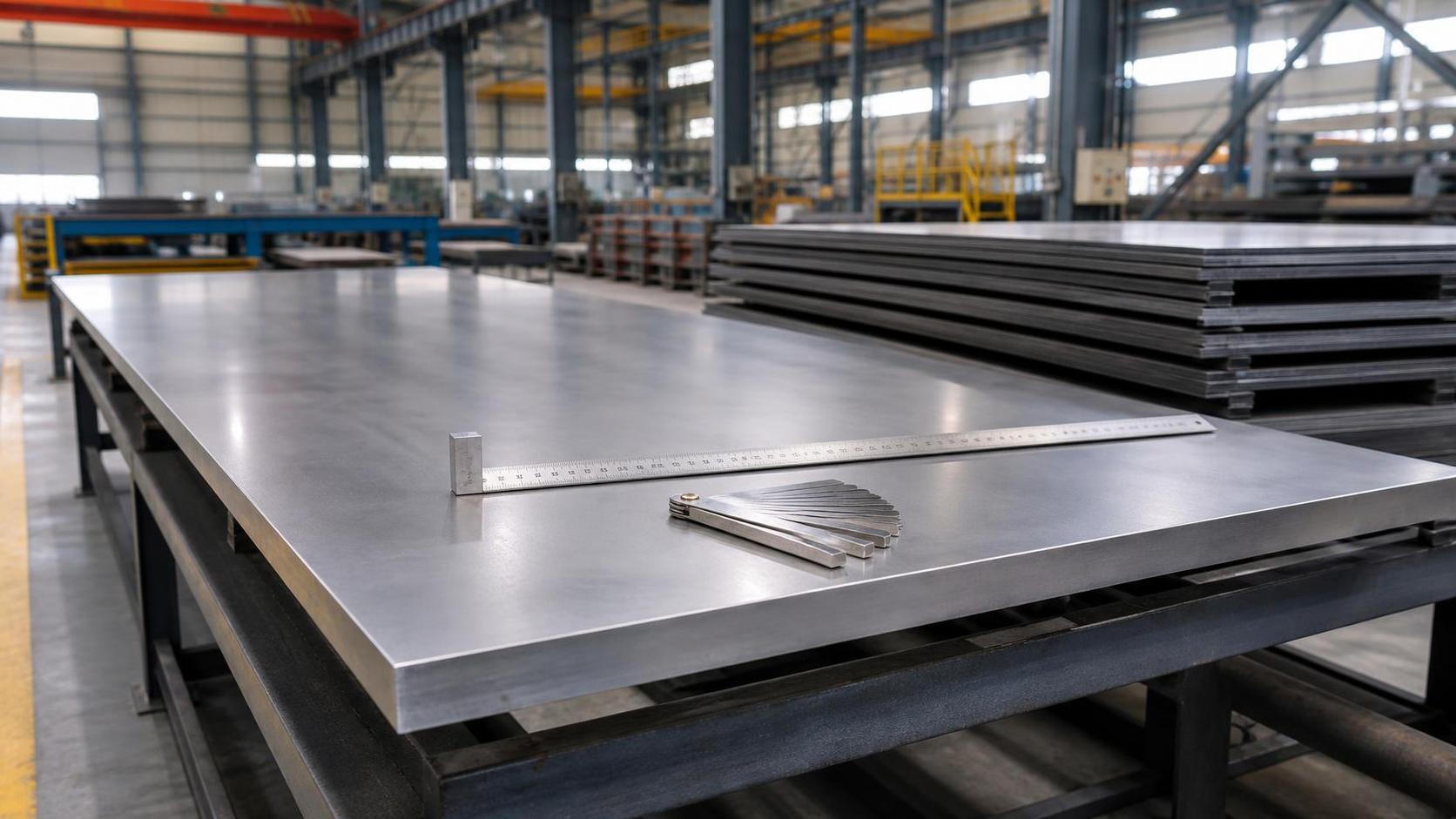
Before placing an order for Steel Plate, buyers need to look beyond price and specification sheets. Flatness and edge quality directly affect processing efficiency, welding performance, and final product reliability. For procurement teams sourcing from global suppliers, knowing how to inspect these details can reduce waste, avoid disputes, and secure more consistent material quality. This guide explains the key checkpoints to review before buying.
Why flatness and edge quality matter more than many buyers expect
When procurement teams compare steel plate offers, thickness, grade, width, and price often get most of the attention. In practice, flatness and edge quality can have just as much impact on downstream cost.
A plate that looks acceptable on paper may still create problems during cutting, forming, welding, machining, or assembly. Poor flatness can slow processing, while damaged or inconsistent edges can increase scrap and rework.
For buyers, this means inspection should not wait until the material reaches the workshop. The best time to control risk is before purchase, when technical requirements, tolerances, and acceptance standards can still be confirmed.
What buyers are really trying to avoid when sourcing steel plate
Most purchasing professionals are not checking flatness and edges out of curiosity. They are trying to avoid production delays, customer complaints, hidden processing costs, and supplier disputes after delivery.
If a steel plate arrives with waves, buckles, camber, or edge burrs, the direct material cost is only part of the issue. The larger loss often comes from interrupted schedules, wasted labor, and reduced confidence.
This is especially important in export procurement, where material may travel long distances before inspection results are fully known. Once cargo is shipped, corrective action is slower, more expensive, and harder to negotiate.
How to evaluate flatness before buying steel plate
Flatness describes how evenly the plate lies across its full surface. A flat plate sits close to a true plane, without excessive waviness, edge lift, center buckle, or local distortion.
Buyers should not rely on visual judgment alone. Even when a plate appears normal in stacked bundles or warehouse photos, measurable flatness deviations may still affect laser cutting, fitting accuracy, and welding alignment.
The first step is to ask the supplier how flatness is defined in the quoted standard. Different standards, grades, dimensions, and production routes may allow different tolerances, so “good flatness” is not enough as a purchase term.
Procurement teams should request a clear flatness tolerance linked to the plate thickness, width, length, and product standard. If the application is demanding, add a project-specific requirement instead of assuming the default mill tolerance is sufficient.
What flatness defects should be checked in supplier communication
Several common shape issues deserve attention before an order is placed. One is overall waviness, where the plate surface rises and falls across its length or width, making stable processing difficult.
Another issue is center buckle, where the middle area is higher or lower than the surrounding surface. This can interfere with clamping, cutting consistency, and assembly fit, especially for fabricated structures.
Edge wave is also common, particularly in thinner plates or material affected by uneven rolling or leveling. Although it may seem minor, edge wave can reduce usable width and create handling problems in automated lines.
Buyers should also watch for coil memory in cut-to-length material. If the plate was not properly leveled after uncoiling, residual stress may lead to lifting corners or re-distortion during fabrication.
Simple ways to verify flatness before shipment
For routine purchases, buyers can ask suppliers to provide flatness inspection records along with mill test certificates. While chemical and mechanical values are standard, shape inspection records add practical confidence before shipment.
A useful request is for photos or videos showing plates placed on a reference surface or checked with a straightedge and gap measurement. This does not replace formal inspection, but it gives a visible basis for review.
For higher-value orders, third-party pre-shipment inspection is often justified. An independent inspector can sample plates, measure flatness deviations, record nonconformities, and confirm whether the lot meets agreed acceptance criteria.
It also helps to define how many sheets will be checked and what happens if one sample fails. Without a sampling rule, buyers may face arguments over whether a defect is isolated or representative of the batch.
How to assess edge quality before placing an order
Edge quality is often overlooked until fabrication begins. However, the condition of the cut edge affects handling safety, dimensional accuracy, weld preparation, and the amount of secondary finishing required.
In procurement terms, edge quality means more than whether the plate has been trimmed. Buyers should understand whether edges are mill edge or slit edge, how they were processed, and what edge condition is acceptable.
Mill edge usually retains the natural edge formed during rolling, while trimmed or cut edges are processed to create more regular dimensions. Each option may suit different applications, cost targets, and appearance expectations.
If the material will be welded, bent, exposed, or precision-cut again, poor edge quality can create delays. Burrs, tears, lamination exposure, notches, or irregular edge profiles often require extra grinding or rejection.
Which edge defects create the biggest downstream problems
Sharp burrs are one of the most immediate concerns because they affect both safety and processing. Burrs can damage handling equipment, slow manual work, and require deburring before the plate moves into production.
Edge cracks are more serious because they may indicate stress concentration, poor processing, or material quality issues. In structural or pressure-related applications, even localized cracks can become unacceptable risk points.
Laminations exposed at the edge are another red flag. They may suggest internal discontinuities that reduce integrity during welding, cutting, or forming, particularly where edge preparation is critical.
Irregular trimming, excessive camber, or width inconsistency can also cause trouble. These problems may not always look severe in photos, but they can make nesting, alignment, and dimensional control more difficult.
Questions procurement teams should ask suppliers before buying
Strong purchasing decisions depend on asking specific questions early. Instead of asking whether the steel plate is “good quality,” ask what flatness tolerance applies and how the supplier verifies it before dispatch.
Ask whether the edges are mill edge, trimmed edge, flame-cut edge, or shear-cut edge. Then confirm what visible and measurable conditions are considered acceptable for burr height, notches, and edge straightness.
It is also worth asking whether the plate comes from hot rolling, cold rolling, or cut-to-length coil processing. Production route affects residual stress, flatness stability, and the likelihood of edge distortion.
Another practical question concerns packaging and loading. Even when the plate leaves the warehouse in good condition, poor stacking, insufficient support, or improper lashing can cause edge damage during transport.
What documents and evidence are worth requesting
Mill test certificates remain important, but they do not usually cover all the shape and edge details buyers care about. Procurement teams should request supporting evidence tailored to the actual application risk.
This may include dimensional inspection reports, flatness check records, packing photos, edge close-up photos, or videos of the selected lot before loading. For repeat orders, this documentation also builds a performance history.
Where tolerances are strict, buyers should place quality clauses directly into the purchase contract. Verbal confirmation or informal messaging is weak protection if a dispute arises after the goods reach destination.
The contract should state the standard, tolerance, inspection method, acceptance basis, and claims period. Clear wording reduces ambiguity and makes supplier accountability much easier to enforce.
How end use should change your inspection standard
Not every project needs the same level of flatness or edge finish. Buyers should match the inspection requirement to the intended use rather than applying one generic rule to all steel plate purchases.
For example, steel plate used in base frames, welded structures, tanks, or machinery components often needs tighter flatness control because misalignment creates labor cost quickly during assembly and welding.
Plate intended for decorative exposure, laser cutting, precision fabrication, or export resale may also justify stricter edge expectations. In these cases, visual consistency and secondary processing efficiency matter more.
By contrast, some general construction or stockholding applications may tolerate wider shape variation if it does not affect performance. The key is to decide the requirement before ordering, not after receipt.
How to reduce quality risk when buying from overseas suppliers
When sourcing internationally, distance increases the cost of mistakes. Buyers should therefore convert expectations about steel plate quality into measurable specifications and documented checkpoints before production starts.
Supplier qualification is the first control point. Review whether the exporter has stable mill relationships, experience with your market, and a record of handling claims related to flatness, dimensions, or edge defects.
Next, confirm whether the supplier can separate standard commercial material from material intended for tighter fabrication requirements. Not every stock lot is suitable for high-precision or appearance-sensitive applications.
Finally, use staged verification where needed: pre-order technical confirmation, pre-shipment inspection, and arrival inspection. This layered approach is usually cheaper than solving quality problems after the material enters production.
Why the lowest quoted price can become the highest real cost
Low-price offers often look attractive when steel markets are volatile. But if the steel plate has poor flatness or inconsistent edges, the apparent savings can disappear through hidden operational losses.
Extra leveling, grinding, sorting, rejected parts, delayed welding, and customer complaints all add cost outside the purchase price. These costs are harder to track, which is why they are often underestimated during sourcing.
Procurement teams should compare suppliers based on total acquisition value, not only unit price. A slightly higher offer with reliable quality control may reduce total project cost and protect delivery commitments.
This is especially true for buyers managing export manufacturing, subcontracted fabrication, or multi-stage assembly, where one material issue can affect several departments at the same time.
A practical pre-purchase checklist for buyers
Before confirming an order, buyers should check five essentials. First, confirm the applicable standard, plate grade, thickness, width, length, and required tolerance for flatness and edge condition.
Second, verify the production route and whether the material is plate mill product or cut-to-length from coil. This affects shape stability and should align with the fabrication requirement.
Third, request evidence: inspection reports, close-up edge photos, surface and stacking images, and where necessary, third-party verification before shipment. Evidence is more useful than general promises.
Fourth, define acceptance criteria and claims terms in the contract. Fifth, confirm packaging and transport protection so plate edges and shape are not damaged after inspection is completed.
Conclusion
Buying Steel Plate successfully is not only about grade and price. For procurement teams, flatness and edge quality are practical indicators of whether the material will perform smoothly in real production.
By checking tolerances, understanding likely defects, asking sharper supplier questions, and documenting acceptance standards before shipment, buyers can reduce waste, avoid disputes, and make better sourcing decisions.
In competitive supply chains, the most effective purchasing teams are not those that buy the cheapest plate. They are the teams that buy plate with predictable quality, usable edges, and flatness suited to the job.
Please give us a message
We welcome your interest in our products and welcome your request for customization. We look forward to establishing successful business relationships with new clients around the world and providing high-quality services for projects in diverse fields.


